
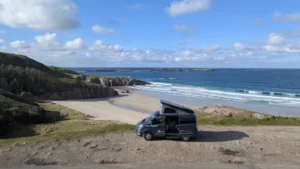
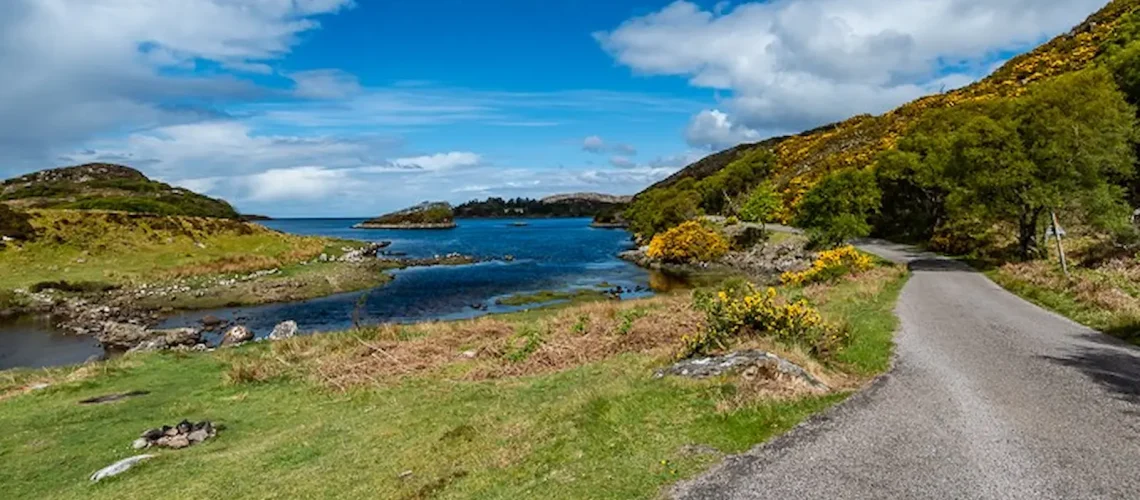

Planning a North Coast 500 campervan adventure? You’re in the right place.
The North Coast 500 (NC500) is one of the world’s most spectacular road trips and the most popular route for many of our campervan guests. Starting and finishing in Inverness, this iconic 500-mile journey takes you through some of Scotland’s most breathtaking scenery, from dramatic mountain passes and rugged coastlines to white sandy beaches, picturesque fishing villages and historic castles.
At Highland Auto Campers, we’ve helped hundreds of visitors explore the NC500. As a local, Inverness-based campervan hire company, we’ve driven the route countless times ourselves and know exactly what first-time visitors want to know before they set off.
Whether you’re wondering how long the NC500 takes, the best time to visit, where to stay, what it costs, or what to expect on the road, we’ve put together this guide to answer the questions we’re asked most often.
Read on for our top tips, practical advice and expert recommendations to help you plan an unforgettable North Coast 500 campervan adventure.

The North Coast 500 (NC500) is one of Scotland’s most famous road trips, often described as Scotland’s answer to Route 66. Launched in 2015, the route was created to showcase the stunning scenery, history and attractions of the Scottish Highlands, while helping to support local communities and businesses across the north of Scotland.
Starting and finishing in Inverness, the NC500 follows a circular route through some of Scotland’s most spectacular landscapes, including rugged coastlines, mountain passes, beaches and remote Highland villages. The 516-mile route can be driven clockwise or anti-clockwise, allowing visitors to experience the best of northern Scotland at their own pace.
The NC500 is particularly popular with visitors exploring Scotland by campervan or motorhome, as it offers the freedom to stop at viewpoints, discover hidden gems and enjoy the journey rather than simply reaching the destination.
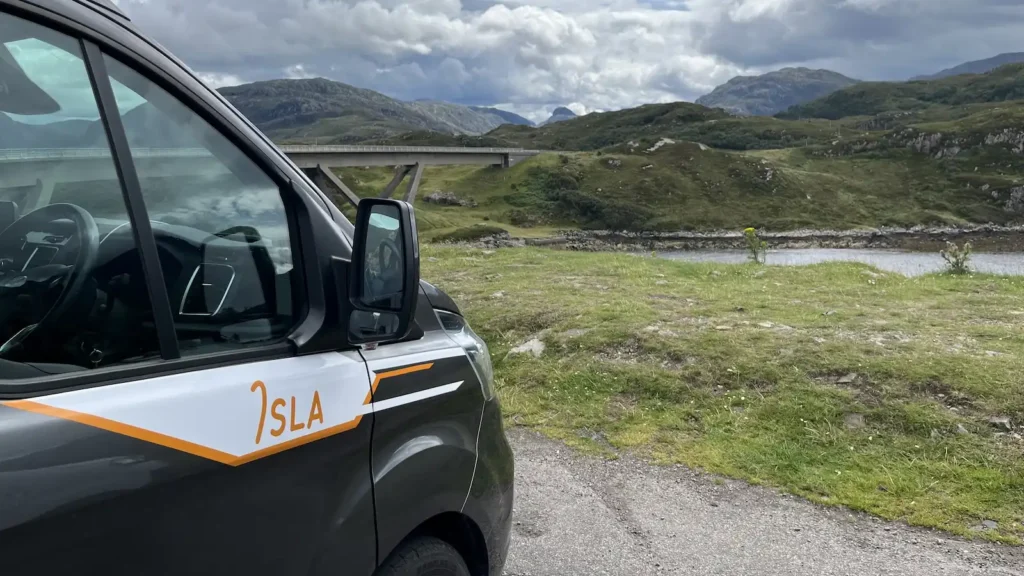
This is by far one of the most common questions we get asked. The simple answer is that the North Coast 500 could technically be driven in a single day, as the route is around 516 miles long. However, rushing around the route would mean missing the very things that make it special.
When people ask us how long they should allow for the NC500, our answer is always: as long as you can afford to take. Many of our guests return from their trip saying they wished they had allowed more time, or that they will need to come back to explore certain areas in more detail.
If you are short on time, we would recommend allowing a minimum of 5 days. This gives you enough time to experience the highlights of the route, visit the main attractions and enjoy some of the incredible scenery along the way.
For the full Scottish Highlands experience, however, we would suggest allowing 7 to 10 days. This gives you the freedom to slow down, explore hidden beaches, discover Highland villages and enjoy the many walks, viewpoints and activities along the route.
Even after living in the Highlands for several years and regularly exploring the NC500, we still find new places to visit. If you don’t have enough time to complete the full route, don’t worry – we would recommend focusing on one section at a time. There are several roads that cross back through the Highlands, allowing you to return to Inverness without having to complete the entire loop.
Taking your time is the best way to experience the NC500, whether you’re travelling by campervan, motorhome or car. The journey is just as important as the destination.

The great thing about the North Coast 500 is that it can be enjoyed at any time of year. The best time to visit really depends on the type of holiday you’re looking for.
Spring (April to May) is one of our favourite times to explore the Highlands. The roads are generally quieter, the days are getting longer, wildflowers begin to bloom, and you’ll often enjoy crisp, clear weather. It’s also before the busiest tourist season, making it easier to book campsites and attractions.
Summer (June to August) offers the longest daylight hours, giving you plenty of time to explore. The Highlands are at their busiest during this period, so we recommend booking your campervan and campsites well in advance. While you’ll see more visitors, you’ll also enjoy lively villages, extended opening hours and the best chance of warm weather.
Autumn (September to October) is another fantastic time to visit. The summer crowds begin to disappear, the landscapes take on beautiful autumn colours, and you’ll still have plenty of daylight for sightseeing. It’s also one of the best times of year for photographers.
Winter (November to March) offers a completely different experience. Snow-capped mountains, quiet roads and dramatic scenery make for an unforgettable trip. Although some attractions and campsites operate reduced opening hours, this is the best time of year to see the Northern Lights if conditions are favourable.

While some of the roads along the North Coast 500, and across Scotland in general, can be narrow and challenging, they are typically well maintained and in good condition. Most visitors find them easy to navigate as long as they drive at a sensible speed, take their time and follow local driving etiquette.
Some sections are more demanding than others, particularly the famous Bealach na Bà mountain pass near Applecross. With its steep gradients and tight hairpin bends, this route should only be attempted by confident drivers. If you’d prefer to avoid it, there’s an alternative route via Shieldaig that still offers breathtaking Highland scenery.
Many of Scotland’s quieter roads are single-track but are equipped with regular passing places, allowing vehicles travelling in opposite directions to pass safely. By using these correctly and driving courteously, you’ll find exploring the Highlands a relaxed and enjoyable experience.
If you’re planning a campervan holiday in Scotland, we’d generally recommend choosing a compact campervan rather than a large motorhome, particularly if you have little experience driving larger vehicles. Although many visitors initially search for motorhome hire, a modern campervan is often a much better choice for the NC500.
Our Ford Transit Custom campervans are similar in size to a large family car or van, making them much easier to manoeuvre on narrow Highland roads, through picturesque villages and into campsites. They offer all the comforts you need for an unforgettable Scottish road trip without the challenges that can come with driving a much larger motorhome.

Whether you drive the North Coast 500 clockwise or anti-clockwise depends on how much time you have and what you want to see.
Many visitors choose to travel anti-clockwise, heading north along the east coast first before reaching the more dramatic scenery of the west coast. The reason for this is that the west coast is often considered the highlight of the route, with its stunning beaches, mountains, coastal views and remote Highland landscapes.
That said, the east coast is definitely worth exploring too, with beautiful fishing villages, historic castles and some fantastic coastal scenery.
If you are planning a shorter trip of 5 days or less, we would recommend heading west first. This allows you to spend more time enjoying some of the NC500’s most spectacular locations before returning to Inverness. If you find yourself short on time, there are several routes across the central Highlands that allow you to shorten your journey without missing out.
For those travelling by campervan in Scotland, taking your time is the best way to enjoy the route. The freedom of a campervan allows you to stop at viewpoints, explore hidden beaches and discover places that many visitors simply drive past.
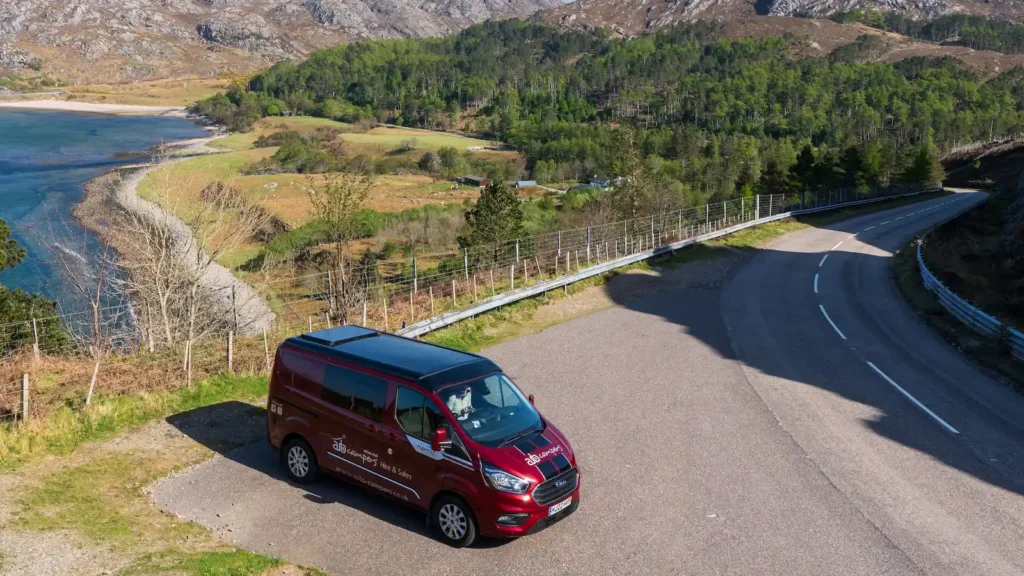
This is a question we get asked regularly. The good news is that there are many excellent campsites along the North Coast 500 route, each offering something different. During the summer months, the most popular sites can get busy, so we always recommend planning ahead and booking where possible.
There are several useful websites that can help you find campsites and places to stay when planning your campervan holiday in Scotland. These are great resources for checking availability and finding campsites that suit your route.
One of our favourite campsites, and one we often recommend for the first or last night of your trip, is Fortrose Bay Campsite. Located just a short drive from our Inverness base, it is the perfect starting point or finishing location for your North Coast 500 campervan adventure.
The campsite overlooks the beautiful Moray Firth and is within walking distance of Fortrose village, where you will find local shops, cafés, restaurants and everything you need to stock up before setting off. It is also a short walk along the beach to Chanonry Point, one of the best places in Scotland to see dolphins from the shore.
The campsite reception can advise on the best times to visit Chanonry Point, as dolphin sightings depend on the tides. You can also enjoy dolphin boat trips departing from Inverness and nearby Cromarty.
While staying in Fortrose and the neighbouring village of Rosemarkie, we recommend visiting:
Another popular stop on the NC500 is Sango Sands Campsite in Durness. Perched above the coastline with incredible views over the North Atlantic, it is famous for spectacular sunsets. Nearby attractions include Smoo Cave, Faraid Head, Cape Wrath and Loch Eriboll, making it an ideal base for exploring the far north-west of Scotland.
Applecross is another must-visit location on the route. This beautiful coastal village overlooks the Inner Sound towards the islands of Raasay and Skye. With excellent seafood restaurants, local produce and the famous Applecross Inn, it is a fantastic place to slow down and enjoy the Highland scenery.
Wherever you choose to stay, the freedom of travelling by campervan in Scotland allows you to explore the NC500 at your own pace, stopping longer in the places that capture your imagination.

Booking campsites on the North Coast 500 is not always essential, but we would always recommend booking ahead where possible, especially during the busy summer months.
Some of the most popular stops, including Sango Sands, Applecross and Fortrose Bay, can become very busy during peak season. Booking in advance gives you peace of mind and allows you to plan your route without worrying about finding somewhere to stay at the end of a long day exploring.
So far, we have not had any guests report that they were unable to find a campsite. However, knowing how popular the NC500 has become, we would always recommend planning ahead rather than relying on availability when you arrive.

This is one of the questions we’re asked most often. The simple answer is no – you cannot legally wild camp in a campervan or motorhome on the North Coast 500.
Scotland’s famous access rights allow responsible wild camping, but these rights only apply to people travelling on foot, by bicycle or other non-motorised means. They do not apply to motor vehicles such as campervans, motorhomes or cars.
If you’re travelling by campervan, you should stay at a designated campsite, an approved campervan stopover or somewhere you have the landowner’s permission to park overnight.
Travelling responsibly on the NC500
To help protect the Highlands and support the local communities that make the North Coast 500 so special, we recommend following these simple guidelines:
Responsible campervan tourism helps preserve the spectacular landscapes of the Scottish Highlands for future visitors while ensuring everyone can continue to enjoy the freedom of exploring the North Coast 500.

The cost of driving the North Coast 500 will depend on your vehicle, accommodation choices and the time of year you travel. As a guide, here are the main expenses to budget for:
As a rough guide, you should budget for fuel, campsite fees, food and any attractions you’d like to visit along the way. The NC500 remains one of the UK’s best-value road trips, offering spectacular scenery, world-class beaches and unforgettable experiences without the cost of travelling overseas.
Much of the North Coast 500 route is made up of single-track roads, which are perfectly manageable when driven with care. However, some sections can be challenging for larger vehicles.
While large motorhomes are comfortable and well equipped, there are parts of the NC500 where they may not be suitable, including some narrow roads and mountain passes. Diversions are available and are clearly signposted for larger vehicles, but choosing the right vehicle will allow you to experience more of the route.
The Bealach na Bà pass is one of the most famous and spectacular sections of the NC500. With steep gradients, tight hairpin bends and narrow sections, it is not recommended for large motorhomes or caravans.
One of the biggest advantages of travelling in a compact campervan is that roads like these are much less intimidating. Our Ford Transit Custom campervans are easy to drive on narrow Highland roads while still providing all the comforts needed for an unforgettable Scottish road trip.
The Scottish Highlands are one of the best places in the UK to experience the Northern Lights (Aurora Borealis). Thanks to the area’s low levels of light pollution and wide open landscapes, the Highlands can offer incredible views of the night sky when conditions are right.
The best chance of seeing the Northern Lights is usually during the autumn and winter months, although they can sometimes make an appearance as early as September. Clear skies, low light pollution and strong solar activity all increase your chances of witnessing this amazing natural display.
If seeing the Northern Lights is on your bucket list, we recommend downloading an Aurora alert app before your trip. These apps can notify you when conditions are favourable and help you make the most of your time in the Highlands.
Travelling by campervan in Scotland gives you the flexibility to stay in some of the darkest and most scenic areas, away from city lights, making it the perfect way to enjoy Scotland’s incredible night skies.
Apple Aurora Watch app
Android Aurora Watch app

Yes! Although the North Coast 500 passes through some of Scotland’s most remote and spectacular landscapes, you’ll find plenty of petrol and diesel stations along the route. The Northern Highlands are home to many thriving communities, so fuel is readily available in the main towns and villages.
You can view a map of petrol and diesel stations here:
Alternatively, the official North Coast 500 app includes fuel station locations, attractions, campsites and other useful information for planning your trip.
Android: https://play.google.com/store/apps/details?id=com.whereverly.nc500.android&hl=en_GB&gl=US
Apple iPhone: https://apps.apple.com/gb/app/north-coast-500/id1435606012

There are several dedicated motorhome service points throughout the Highlands where you can top up your fresh water, empty your grey water and dispose of toilet waste safely.
Many campsites will also allow non-guests to use their service facilities for a small fee, making it easy to keep your campervan stocked up and ready for the next stage of your journey.
You can find an up-to-date map of motorhome service points across Scotland here:

In most cases, no. All of our campervans are fitted with a leisure battery that powers the lighting, fridge, water pump and USB charging sockets, so you can enjoy off-grid camping without needing an electric hook-up.
The only appliances that require an electric hook-up are the 240V mains sockets, which are ideal if you need to power items such as a laptop charger, hairdryer or other household electrical devices.
Your leisure battery is recharged in three ways:
For most of our customers, the combination of driving and solar charging provides more than enough power throughout their trip, so booking a pitch with an electric hook-up is usually a matter of personal preference rather than a necessity.

To help you make the most of your trip, we recommend visiting the official North Coast 500 website before you travel. Their free interactive map and mobile app are excellent resources for discovering scenic viewpoints, attractions, beaches, walking routes, campsites and places to eat along the route.
All of our campervans can be connected to your smartphone using Apple CarPlay or Android Auto (where supported by your device). This allows you to safely use navigation apps such as Google Maps, listen to your favourite music and make hands-free phone calls while driving.
As mobile signal can be limited in some of the more remote parts of the Highlands, we recommend downloading offline maps in Google Maps before you set off. This allows you to continue navigating even when you don’t have a mobile data connection.
A little planning before your journey will help you discover some of the hidden gems that make the Scottish Highlands such a memorable place to explore.
Apple NC500 app
Android NC500 app

The answer really depends on the type of adventure you’re looking for. Whether you enjoy spectacular scenery, wildlife, beaches, castles, whisky distilleries or mountain walks, the North Coast 500 has something for everyone.
A great place to start is the official North Coast 500 website, which is packed with ideas, suggested itineraries and attractions. We also recommend taking a guidebook with you, as many include hidden gems and local history that you might otherwise miss.
One of the biggest advantages of exploring the Highlands in a campervan is the freedom to leave the main route and discover places that many visitors never see. Some of our favourite spots include:
Don’t feel you have to tick off every attraction. Some of the most memorable moments come from taking a quiet single-track road, stopping at a deserted beach or discovering a cosy café or village that wasn’t on your original itinerary.
That’s the real beauty of travelling the North Coast 500 in a campervan – the freedom to explore at your own pace and create an adventure that’s uniquely yours.

Midges are a part of life in the Scottish Highlands, but they shouldn’t put you off visiting. The midge season typically runs from mid-May to the end of September, although their numbers vary greatly depending on the weather.
Midges thrive in warm, damp and still conditions. A light breeze of around 5 mph or more, hot sunshine or dry weather is usually enough to keep them away. As much of the North Coast 500 follows the coastline, you’ll often benefit from a sea breeze, meaning midges are less of an issue than many people expect.
If you do encounter them, there are a few simple ways to minimise the annoyance:
For most visitors, midges are only a minor inconvenience and certainly not a reason to miss out on exploring the incredible scenery of the North Coast 500. With a little preparation, you can comfortably enjoy everything the Scottish Highlands have to offer.
Ready to start your North Coast 500 adventure?
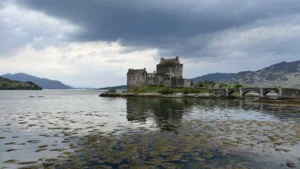
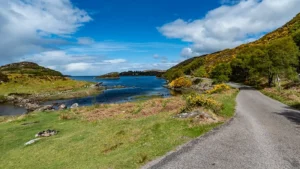
If you’re looking for a holiday filled with unforgettable memories, breathtaking scenery and incredible experiences, the North Coast 500 should be at the top of your list. From white sandy beaches and crystal-clear waters that rival the Caribbean, to dramatic mountains, ancient castles, world-class wildlife and award-winning food and drink, the Scottish Highlands truly have something for everyone.
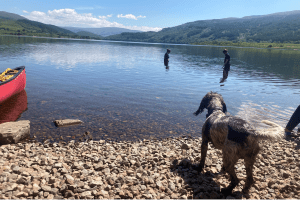
Whether you’re hoping to hike through spectacular landscapes, spot dolphins and puffins, sample local whisky, explore historic villages or simply relax beside a peaceful loch, the North Coast 500 offers the freedom to create a holiday that’s completely your own.
| Cookie | Duration | Description |
|---|---|---|
| cookielawinfo-checkbox-analytics | 11 months | This cookie is set by GDPR Cookie Consent plugin. The cookie is used to store the user consent for the cookies in the category "Analytics". |
| cookielawinfo-checkbox-functional | 11 months | The cookie is set by GDPR cookie consent to record the user consent for the cookies in the category "Functional". |
| cookielawinfo-checkbox-necessary | 11 months | This cookie is set by GDPR Cookie Consent plugin. The cookies is used to store the user consent for the cookies in the category "Necessary". |
| cookielawinfo-checkbox-others | 11 months | This cookie is set by GDPR Cookie Consent plugin. The cookie is used to store the user consent for the cookies in the category "Other. |
| cookielawinfo-checkbox-performance | 11 months | This cookie is set by GDPR Cookie Consent plugin. The cookie is used to store the user consent for the cookies in the category "Performance". |
| viewed_cookie_policy | 11 months | The cookie is set by the GDPR Cookie Consent plugin and is used to store whether or not user has consented to the use of cookies. It does not store any personal data. |